
The Girly Guide to Artificial Intelligence
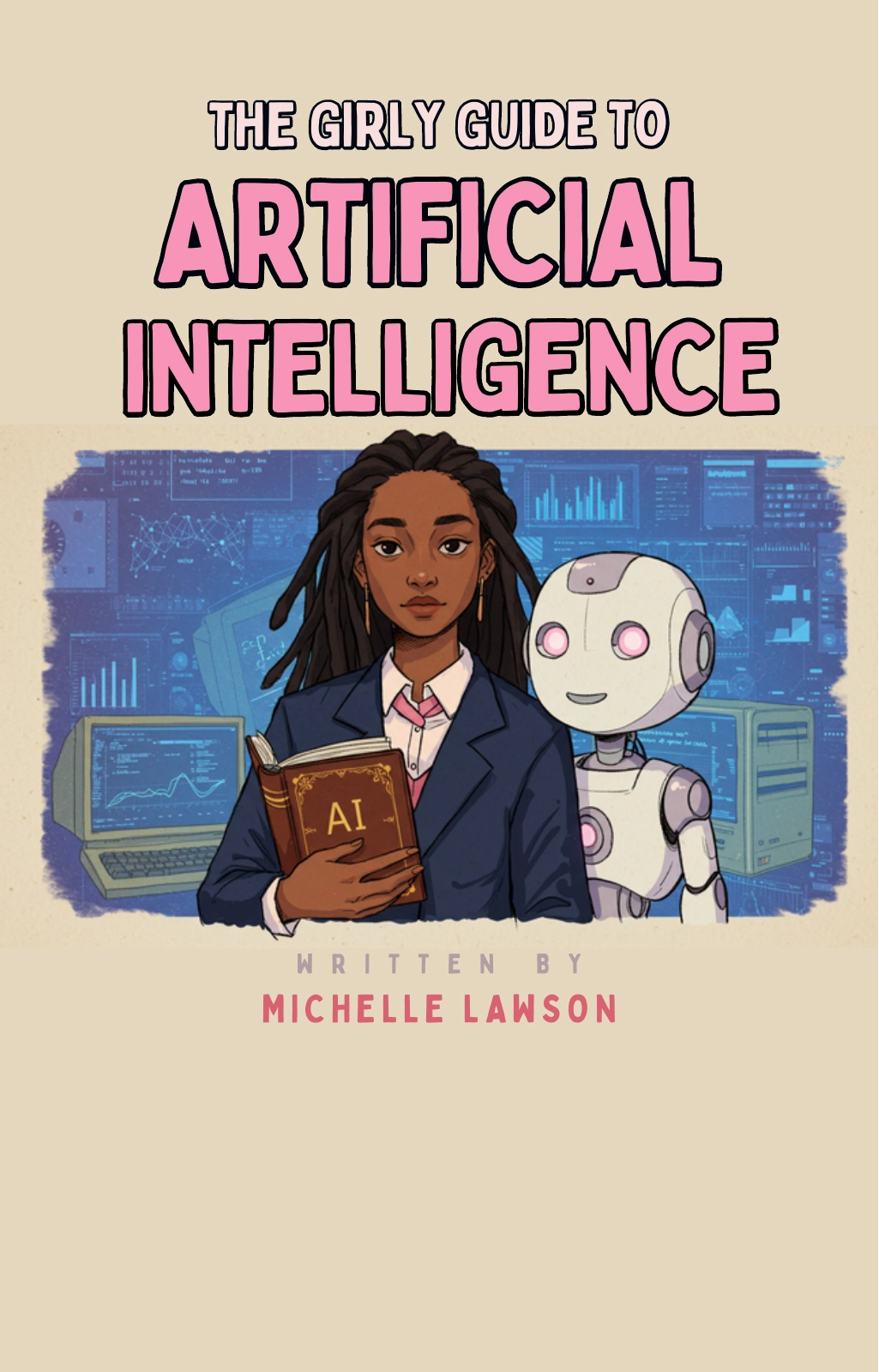
267 illustrated pages · 12 chapters
Before we begin
Introduction
01101000 01100101 01101100 01101100 01101111!
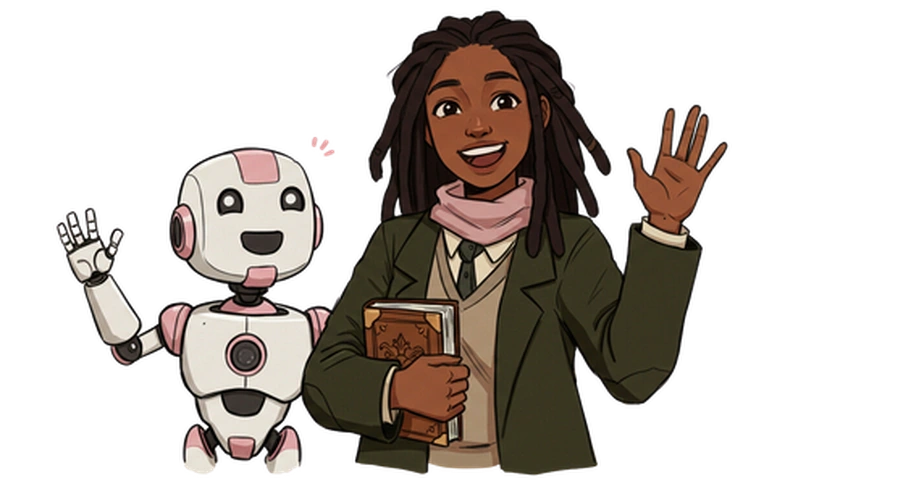
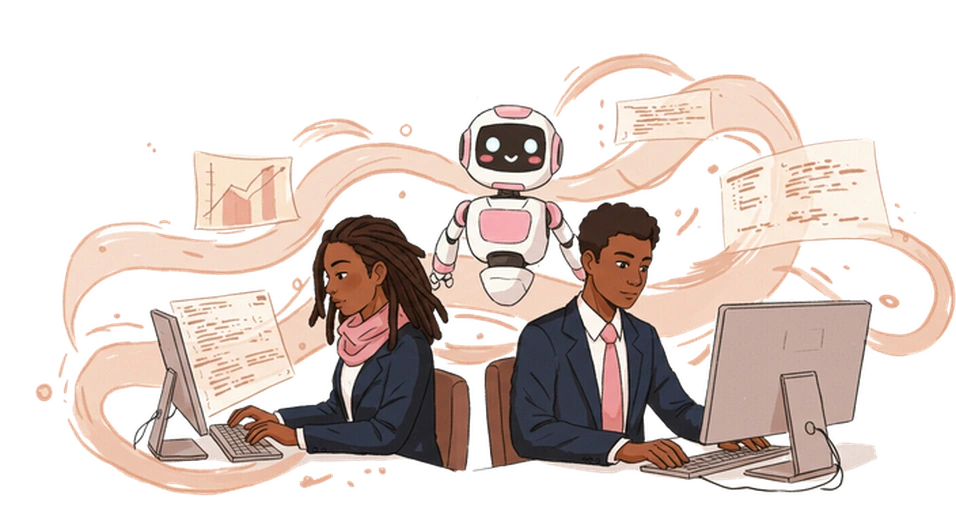
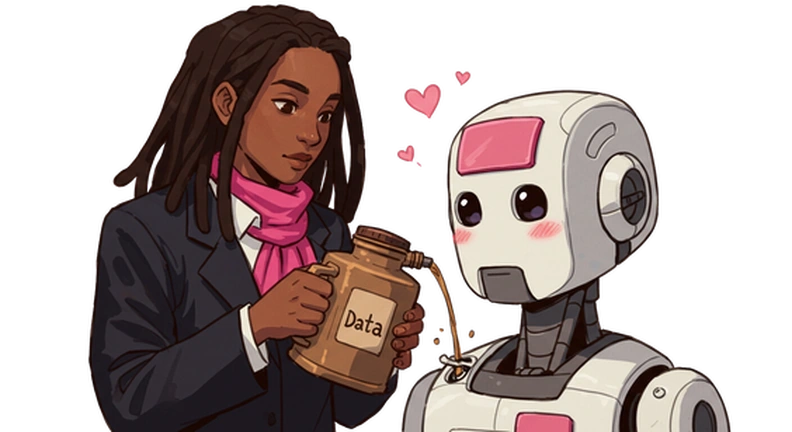
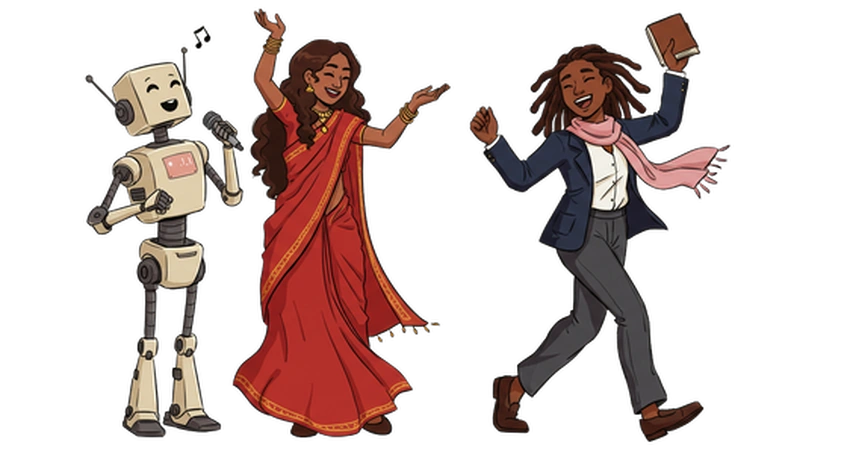
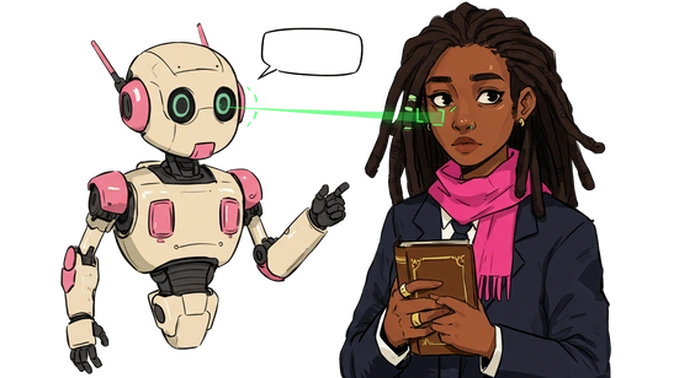
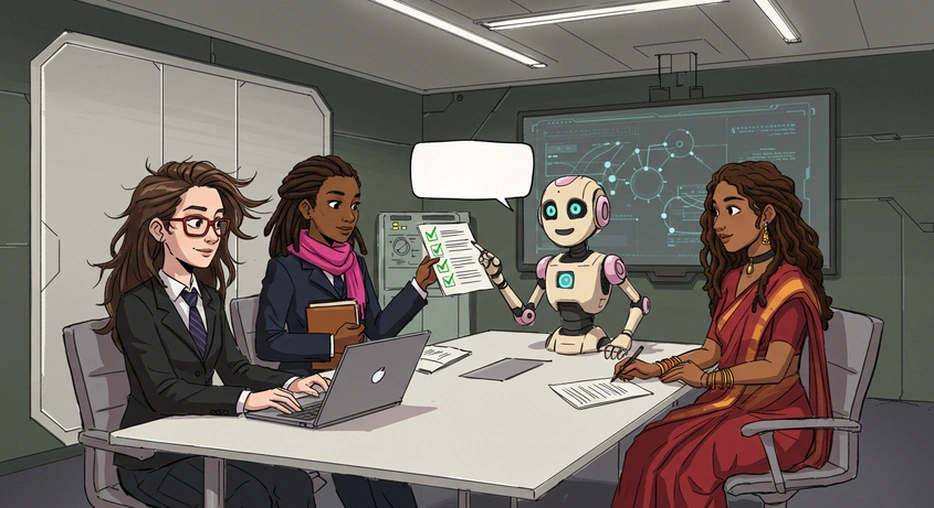
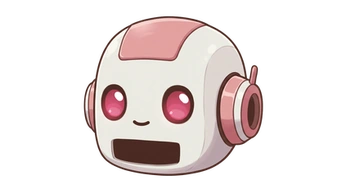
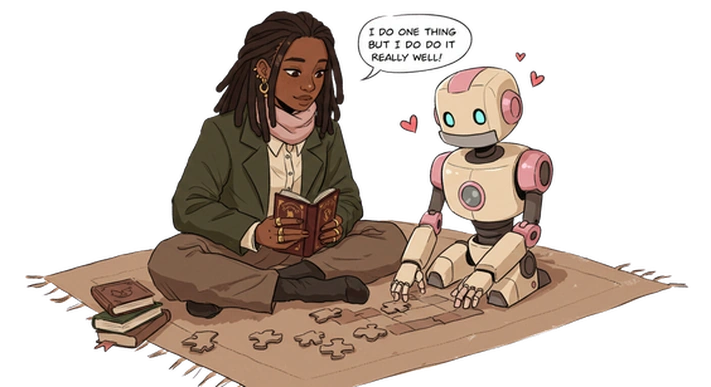
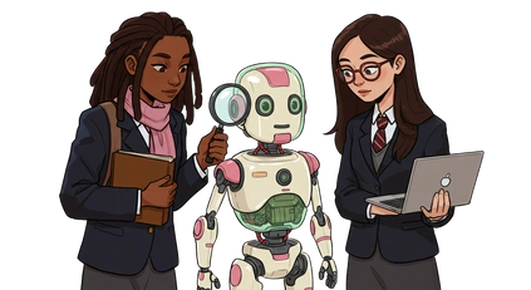
Hiya reader! This is Mia, with my favorite bot, Mai, and we're here to guide you through the mind-blowing world of AI. Through this unique textbook, “The Girly Guide to Artificial Intelligence”, you’re about to learn what AI even is, how to use it to solve real problems, and—get this—you’ll create your own AI projects. How slay is that?
How to Use this Book
Here’s what makes this book extra special and how you can absolutely crush it while using it:
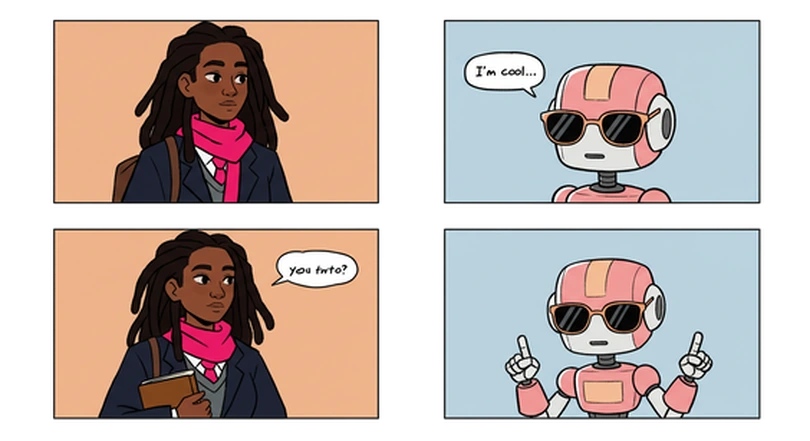
1. Your Dream Team: Mia & Mai Mia: That’s me! I’m your relatable AI bestie—here to break down complex concepts, share insider tips, and keep things fun. Think of me as your go-to girl for all things AI. Mai: My AI-powered partner-in-crime. Mai is here to summarize research papers, suggest cool resources (think must-read articles, fire YouTube videos, and beyond), and even sprinkle in jokes or comics to keep you giggling. Plus, Mai’s got some spicy AI questions and exercises to really get you thinking!
2. Learn by Doing: Exercises & "Try This" Sections Every chapter has hands-on exercises and thought experiments designed to help you slay your understanding. The "Try This" sections? They’re where you’ll get to play with real AI tools and datasets. Hands-on practice = major glow-up for your skills.
3. Mai’s Bubbles Throughout the guide, look for Mai’s pink bubbles. These sections highlight key definitions, research papers, and big questions to explore. Perfect if you’re feeling extra curious or want to impress someone at a tech conference.
4. Visuals, And Make It Fun! We’re talking comics, graphs, and visual aids that actually make sense (and look cute). Real-world examples? Check. Links to extra reading? Double check. If you’re a visual learner, you’ll love it here.
5. The Glossary (AKA Your AI Cheat Sheet) Stuck on a term? The Glossary’s got you. It breaks down key AI words into plain, relatable language—think "chill dictionary vibes." Plus, we’ve kept it very cutesy, very mindful and very demure.

6. Your Big Moment: The Capstone Project By the end of this guide, you’ll build your very own AI project. All the concepts and skills you learn here will come together in one amazing creation. (Yes, this is your main character moment.)
7. Share the Love (and Your Learning) Want to make your AI journey even more iconic? Share your insights, projects, or even your questions on socials like LinkedIn and Insta. Don’t forget to tag #TheGirlyGuideToAI — this is a learning community, and you’re so invited.
Chapter 01 · Foundations
Introduction to Artificial Intelligence
1.1. WHAT IS AI?

So, what exactly is AI?
Is it the robots in "Ex Machina"? The all-knowing HAL 9000? Or maybe just your phone trying (and often failing) to autocorrect your texts? Let’s cut through the buzzwords and confusion to give you the full lowdown on artificial intelligence.
Artificial Intelligence, or AI, is the simulation of human intelligence in machines.
Basically, we’re trying to make computers think, learn, and problem- solve like humans. We want machines to work as well (or even better) as our brains do. Sounds wild, right? AI isn’t just about building robots that can outsmart us (although, yes, that’s a subplot in the sci-fi genre); it’s about designing systems that can handle specific tasks or even learn over time—a concept we’ll revisit in Chapter 4 called machine learning.
Artificial Intelligence (AI) refers to the development of systems or machines that can simulate or mimic human intelligence and behavior, allowing them to perform tasks such as learning, reasoning, and adapting autonomously.
However, the definition of "intelligence" itself is debated, as it can encompass a spectrum from imitating human-like reasoning to achieving ideal rational outcomes, which might not always align.
If you’re scrolling TikTok and someone says, “AI is the future,” it might feel like they’re just trying to sound deep. But let’s unpack what AI actually involves in three levels:
Narrow AI (ANI): Think of this as single-task AI. It’s designed to do one thing well—like Siri understanding your voice or Google Photos identifying your dog in every picture.
ANI is super common and already powering a lot of the tech you use daily. Some examples of ANI include Siri helping you set reminders, Google suggesting search results as you type, and your email inbox filtering out spam.
General AI (AGI): This is the holy grail—machines that can think and reason like humans. AGI could solve problems, understand emotions, and multitask like a pro. Spoiler alert: we’re not quite there yet, and experts debate if we’ll ever be.
Superintelligence (ASI): This is the realm of science fiction, where machines are way smarter than us. Think Skynet or Ultron—AI so powerful it could (potentially) take over the world. This is why some folks, like Elon Musk, are screaming, "Hey, maybe let’s not unleash a robo-apocalypse."
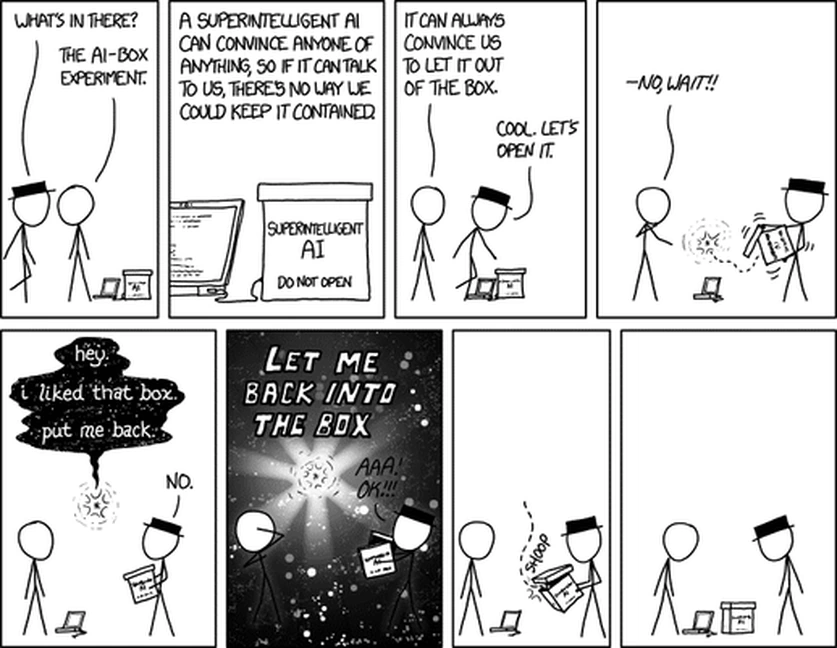
Comic by Eric Brown
We explore these “levels” of AI deeper in section 1.3. Think of your favorite AI tool. Would you categorize it as ANI, AGI... or maybe, even ASI?
so, how does ai work?
AI isn’t magic; it’s math. (Sorry to burst your bubble.) At its core, AI relies on algorithms—step-by-step instructions—to process data and make decisions. Here’s the tea:
Rule-Based Systems
Old-school AI, or Good Ol' Fashioned AI (GOFAI hehe), focused solely on logic and pre-written rules. Imagine creating a flowchart with a billion "if this, then that" conditions. These systems could handle simple tasks like diagnosing car engine problems or playing tic-tac-toe, but they fell apart when things got unpredictable. Think of them as that super organized friend who has a meltdown when the Wi-Fi goes down.
Early chatbots like ELIZA, created in the 1960s, used rule-based responses to simulate conversations. It wasn’t "intelligent," but it fooled a lot of people into thinking it was.
You can try out ELIZA here, she’s very fun to chat with!!!
CHAT WITH ELIZA
Machine Learning
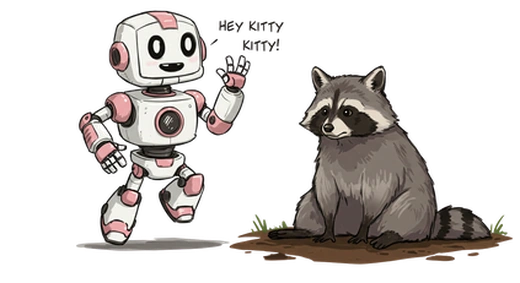
Fast forward to today, and we’re living in the age of machine learning (ML). ML flips the script—it doesn’t rely on hand-written rules but instead learns from data. Think of it like teaching a toddler: you show it thousands of pictures of cats, and over time, it figures out what a cat looks like. Sure, it might confuse a raccoon for a cat once in a while, but hey, we all make mistakes.
Machine learning uses datasets (big ones!) and algorithms to find patterns. For example, you give it a dataset of emails labeled "spam" or "not spam," and it learns to filter out spam on its own.
From recommending TikTok videos to predicting the weather, ML powers a lot of the tech you use daily.
Deep Learning
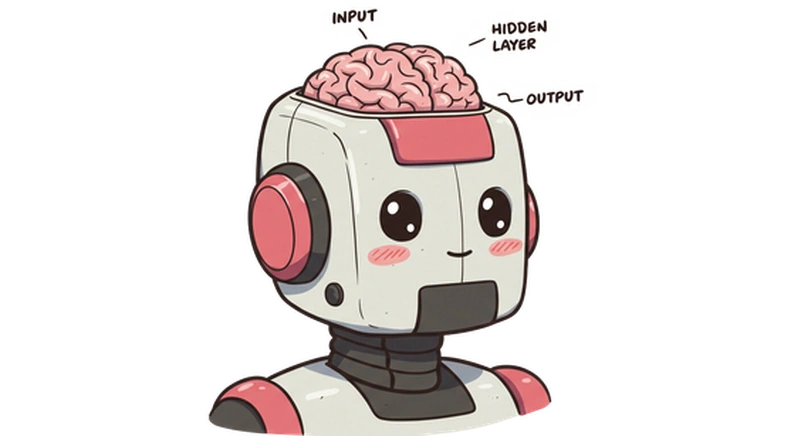
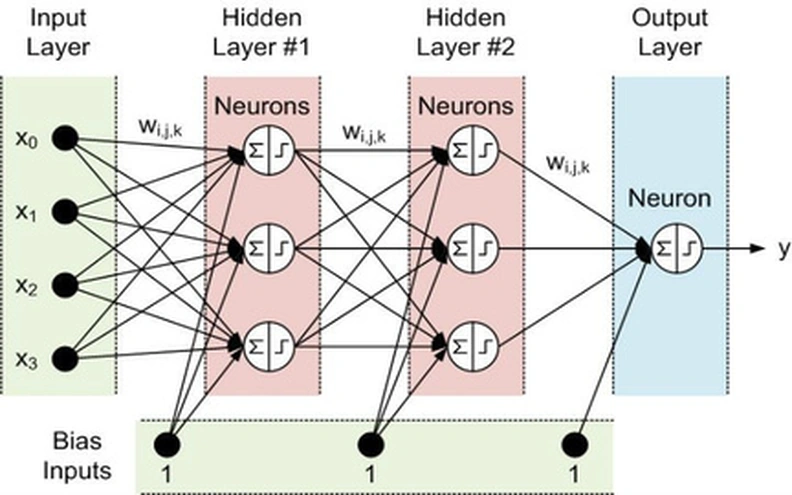
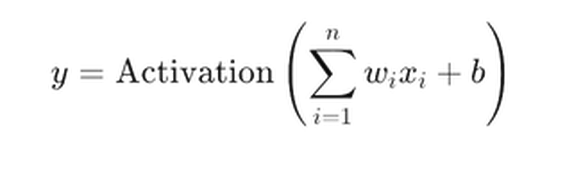
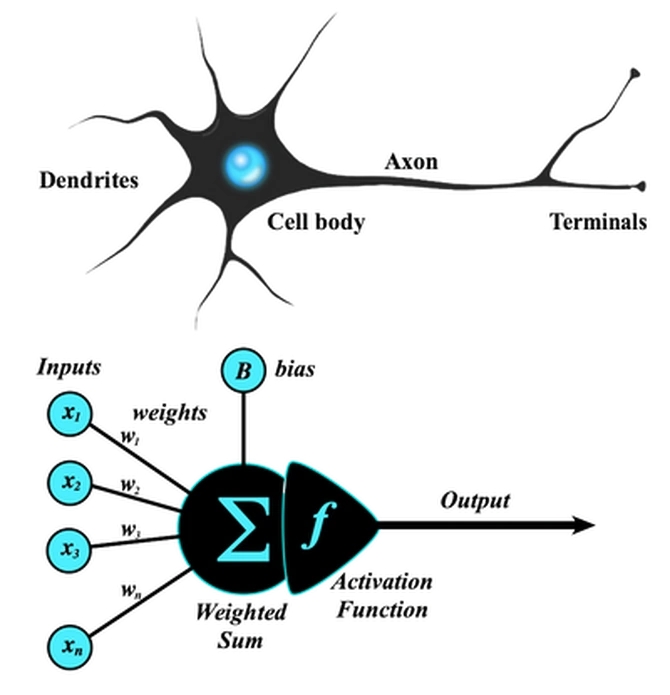
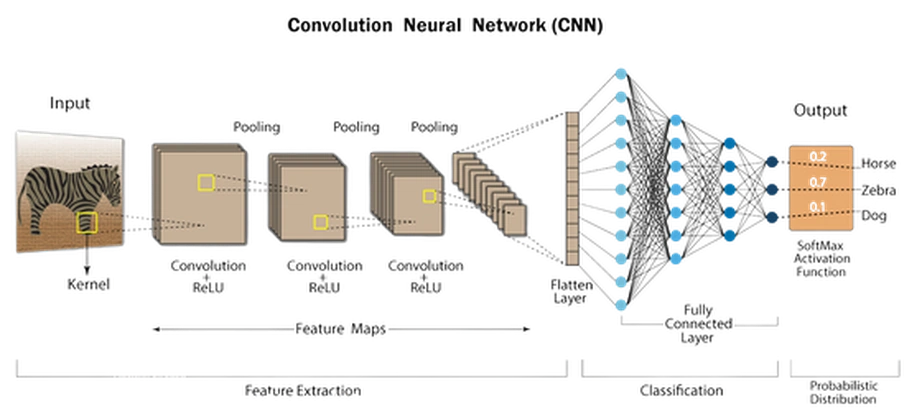
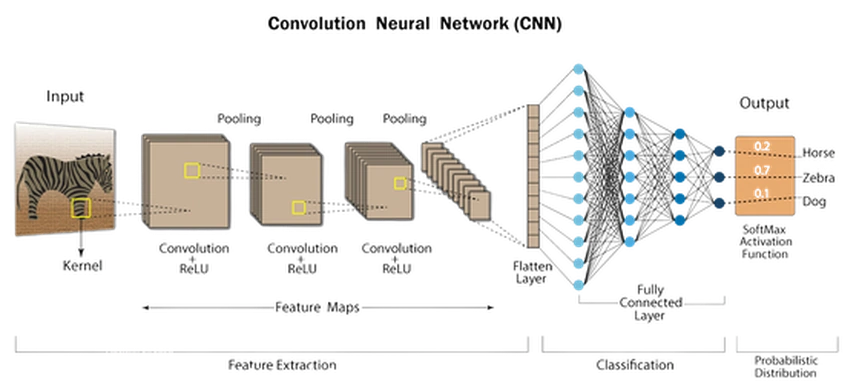
Deep learning (DL) takes machine learning to the next level. It uses neural networks, which are loosely inspired by how our brains work. Think layers of interconnected nodes—each "neuron" processes a piece of data, like recognizing edges in an image, and passes it along. By stacking these layers (hence "deep" learning), the system gets better at complex tasks.
Neural networks use layers of "neurons" to process data. The input layer takes in raw data (like pixels from an image), the hidden layers process and learn patterns, and the output layer delivers the result (like "this is a cat").
Deep learning has crushed it at tasks like translating languages, diagnosing diseases, and even beating human champions in games like chess and Go. We talk about AlphaGo in Section 1.2 - that’s a perfect example of Deep Learning flexing on us.
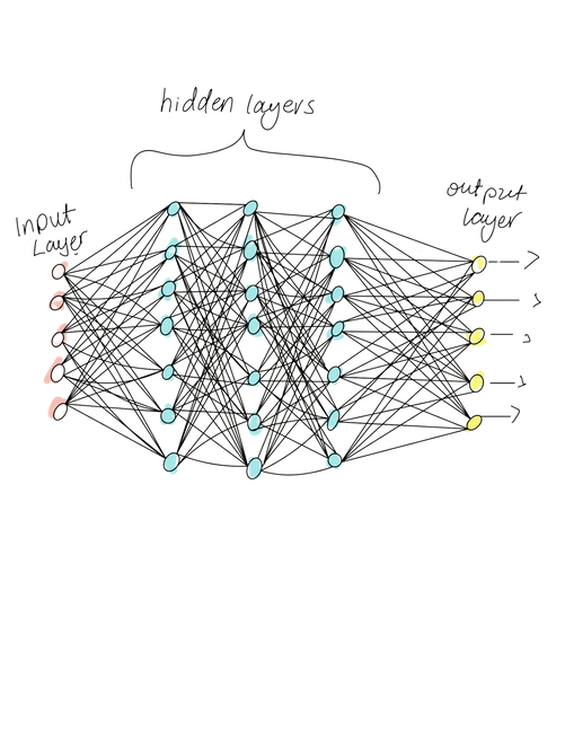
Neural Network Illustration
Fully explaining deep learning and machine learning takes a lot more than two pages. As such, Chapter 4 is dedicated entirely to machine learning, while Chapters 5 & 8 go in depth with deep learning. 5
AI IS MORE THAN TECHNOLOGY
AI isn’t just a tech buzzword; it’s a lens to understand intelligence itself. Philosophers, psychologists, and engineers have all asked: "What does it mean to think? Can a machine ever feel?" Spoiler: they’re still arguing about it.
Some see AI as a mirror, reflecting our hopes and fears about what it means to be human. Others are like, “Can you guys chill? AI’s just here to optimize spreadsheets.” Both takes are valid, depending on your vibe.
AI Myths That Need Fixing
While we ponder these big questions, let’s set the record straight on a few things:

AI isn’t sentient. (Yet.) Your Big Questions in AI Roomba doesn’t dream of electric sheep, and ChatGPT Can Machines be Conscious? isn’t plotting to overthrow humanity. AI doesn’t have What does it mean for AI to understand? feelings, goals, or self- awareness—it just follows its Can AI achieve general programming. intelligence?
AI isn’t perfect. It’s powerful, How can we ensure AI but it’s still very prone to bias aligns with human values? and mistakes. If you’ve ever (and which values?) yelled at autocorrect, you get What are the limits of AI it. creativity?
AI isn’t replacing humans. At What do you think? least not entirely. It’s more We will explore these about collaboration. Sure, AI questions as we learn more might automate boring tasks, about AI through this book. but it also creates jobs (like AI engineers —how meta is that?).
Understanding AI isn’t just for techies or sci-fi nerds. Whether you’re hyped, skeptical, or "meh" about it, AI is shaping our world. It’s changing how we communicate, work, and even think about creativity and art. The goal of this introductory chapter is to demystify AI so that when someone says, “The machines are taking over,” you can confidently reply, “Well, acTuALLy, it’s a bit more nuanced than that.”

Because at the end of the day, AI is just a tool—an incredibly cool, powerful, and sometimes frustrating tool. And like all tools, it’s up to us to use it wisely. So buckle up, because we’re going one step deeper into this wild, ever-evolving field.
1.2. a brief history of ai
The history of AI is one juicy glow-up story: humble beginnings, setbacks, breakthroughs, and finally, the main character moment we’re living in now. Let’s get into it!
1950s: The Birth of an Idea
Let’s kick things off with Alan Turing, the OG of artificial intelligence. In 1950, he wrote the iconic paper, "Computing Machinery and Intelligence," and asked the big question: "Can machines think?"
COMPUTING MACHINERY & INTELLIGENCE Alan turing

READ HERE
He proposed the Turing Test, a way to figure out if a machine could imitate human intelligence well enough to fool a person. Spoiler: this idea is still influencing AI today.
The Turing test involves a human evaluator who engages in natural language conversations with both a human and an AI participant, without knowing which is which.
If the evaluator cannot reliably distinguish between the human and AI responses, the machine is said to have passed the test. This approach helps measure AI's capability to demonstrate human-like intelligence in conversation.
In 1956, AI became official at the Dartmouth Summer Research Project where the term "artificial intelligence" was coined. Think of this conference as AI’s first big debut. It’s where legends like John McCarthy and Marvin Minsky got the ball rolling. (We stan Marvin Minsky!!)
1960s & 1970s: Things are happening, but...
The 1960s were all about rule-based systems. Researchers were building programs to solve algebra problems, recognize shapes, and even translate languages. But these early systems were super rigid. They could only handle tasks they were specifically programmed for (based on rigid rules).
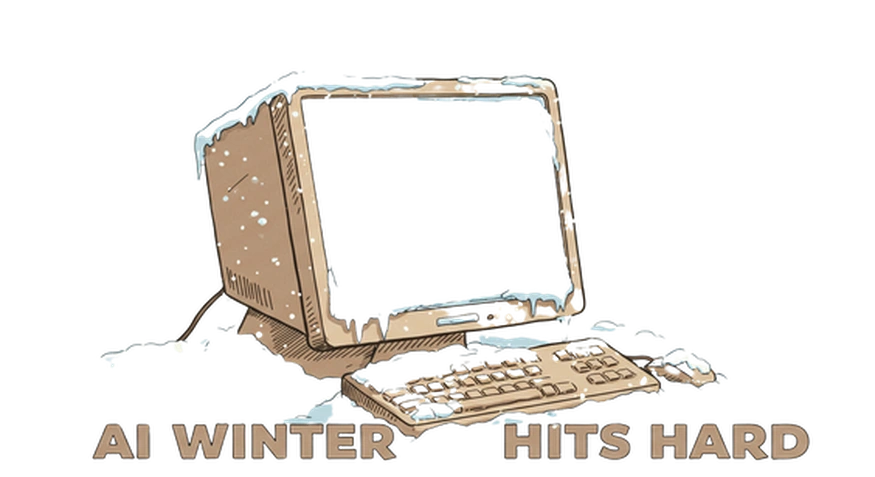
Things started to slow down in the 1970s during what we now call the first AI Winter (brrr 🌬️). Funding dried up because people realized true AI was harder than it looked.
1980s: AI Returns with a Vibe Check
AI made a comeback in the 1980s with expert systems. These programs used rules and logic to make decisions.
At the same time, researchers started experimenting with neural networks inspired by how the human brain works. Neural networks would later become the backbone of modern AI.
1990s: AI Gets Competitive
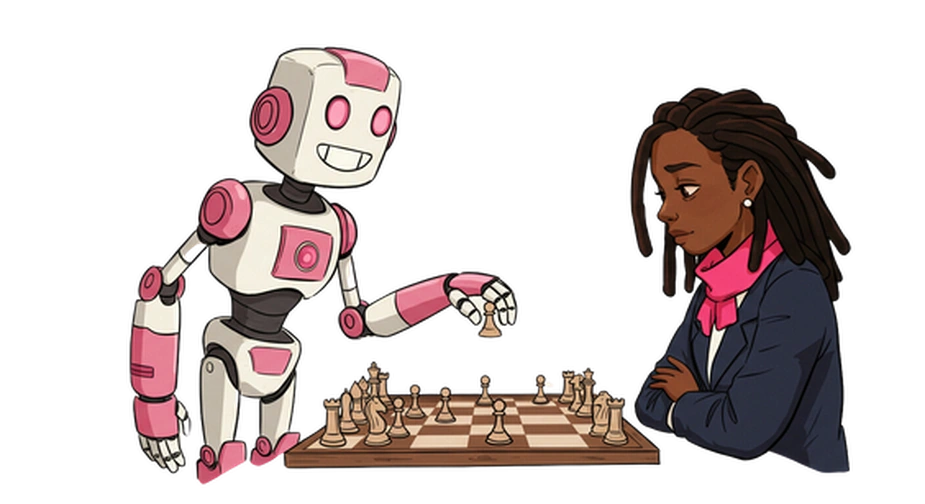
The 1990s had LOTS of milestones. IBM’s Deep Blue defeated world chess champion Garry Kasparov in 1997, proving that machines could outsmart humans (at least on the chessboard). This was the moment AI started flexing on us.
And let’s not forget about speech recognition. In 1994, researchers achieved the first human-level spontaneous speech recognition system. Sphinx-II, a system designed by researchers at Carnegie Mellon University, used Hidden Markov Models to more accurately model speech using probabilities. This paved the way for virtual assistants like Siri and Alexa.
DOWN THE RABBIT HOLE...
How does speech recognition work? How has it evolved over the years?

LEARN MORE HERE
2000s: Data Takes Center Stage
Welcome to the era of Big Data. By the early 2000s, the internet was becoming a mainstream tool for communication, commerce, and entertainment. Devices like the iPhone (2007) made it easy for billions of people to access the internet, take photos, and use apps, generating data constantly. The cost of storing data also dropped significantly due to advances in hard drive technology and the rise of solid-state drives (SSDs).
Suddenly, researchers had access to massive datasets, which meant AI could start learning from lots of real- world information. This is when tools like Google Translate and early recommendation systems (hello, Netflix) started popping off.
The 2000s also gave us autonomous vehicles—shoutout to the DARPA Urban Challenge, a competition organized by the U.S. Defense Advanced Research Projects Agency in 2007, where self-driving cars were tested IRL, with traffic laws and everything.
2010s: The Deep Learning Revolution
Here’s where AI really started serving looks. In 2012, Geoffrey Hinton’s team crushed the ImageNet competition using deep learning – machines could identify images better than ever before.
Google’s DeepMind made headlines in 2016 when its AlphaGo program defeated top Go player Lee Sedol. This was a big deal because Go is waaay more complex than chess.
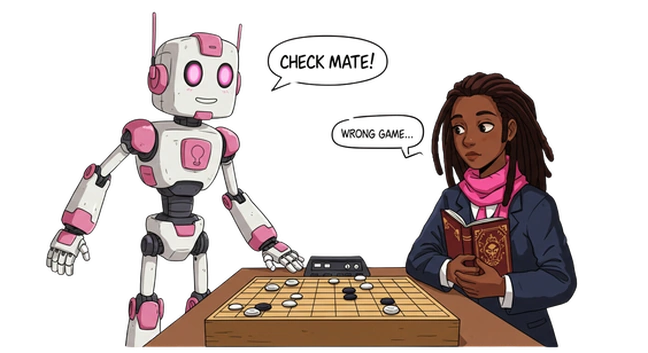
And let’s not forget IBM Watson winning Jeopardy! in 2011, proving that AI could handle natural language and trivia like a boss.
2020s: AI in the Spotlight
Fast forward to now, and AI is everywhere. In 2020, OpenAI dropped GPT-3, a language model so powerful it could write essays, code, and even jokes (eh, kind of). Then came ChatGPT in 2022, which made conversational AI very mainstream. Your DMs will never be the same.
Would chatgpt pass the “Turing Test”?
Think back to the Turing test we described on page 8. Do you think chatGPT would pass that test? What makes it successful or not successful?

AI is also making breakthroughs in healthcare (thanks, AlphaFold 2), autonomous driving, and creative fields like art and music. The possibilities are endless—and we’re just getting started.
You next...
The history of AI is filled with highs, lows, and breakthroughs that changed the game. From Turing’s question to the ChatGPT era, AI has come a long way—and you are about to learn how to be part of its future.
EXERCISE 1 - intro to AI
Ex 1.1. Name three examples of AI you’ve interacted with today (e.g., voice assistants, recommendation systems, or autocorrect). For each, describe what it does and how it helped you.
Ex 1.2. Pick one specific app or tool you use regularly that relies on Narrow AI (e.g., Spotify, Google Photos). Research and explain how its AI works behind the scenes. Bonus: Think about how it could be improved or made more ethical.
Ex 1.3. Visit ELIZA, an early chatbot based on rule-based AI. Interact with it and observe its limitations. Write a short summary of your experience and compare ELIZA’s capabilities to modern chatbots like ChatGPT.
Ex 1.4. Research one AI Winter (e.g., the 1970s or 1987-1993). Summarize what caused the slowdown and discuss how AI managed to rebound afterward. Reflect: What lessons can the AI field learn from these setbacks?
Ex 1.5. Find a real-world example where AI made a significant mistake (e.g., biased hiring systems, facial recognition errors). Write a brief explanation of what happened and suggest one actionable way this issue could have been prevented.



Chapter 02 · Foundations
Your First AI Project



Chapter 03 · Foundations
Building Blocks of AI


Chapter 04 · Learning and models
Machine Learning Fundamentals







Chapter 05 · Learning and models
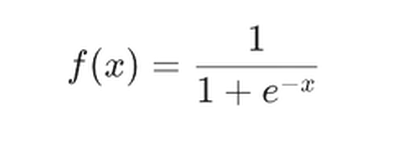
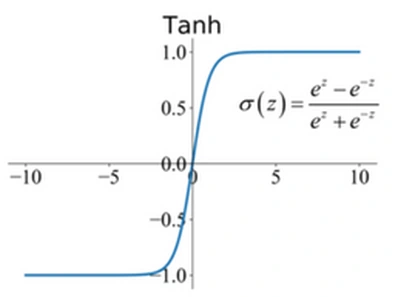
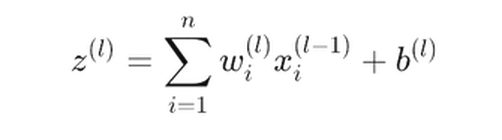
Neural Network Basics







Chapter 06 · AI applications
Computer Vision







Chapter 07 · AI applications
Natural Language Processing (NLP)


Chapter 08 · Advanced topics
Advanced Deep Learning


Chapter 09 · Advanced topics
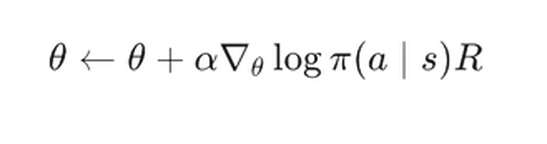
Reinforcement Learning



Chapter 10 · Tools and real-world AI
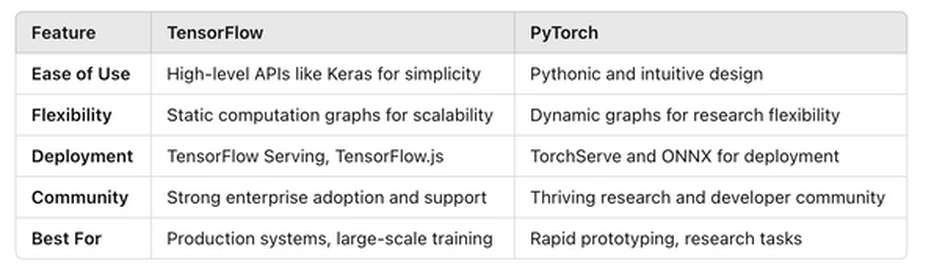
AI Development Tools and Frameworks

Chapter 11 · Tools and real-world AI
Ethics, Challenges, and Future Trends

Chapter 12 · Capstone
Building AI That Makes a Difference

Your AI cheat sheet